
Philosophy and essays
Theory of thresholds
Articulation between irreducible domains
Sound and sense, matter and psyche: when two domains are irreducible, the way out is neither to reduce nor to fuse, but to articulate.
Secure payment with Stripe
- Immediate download after payment
- DRM-free file, yours to keep
- Read on any device
- 5 downloads over 7 days
About this book
There is a problem philosophy has not solved in twenty-five centuries, partly because it almost never saw it as a single problem: the passage between orders that do not resemble each other —sound and sense, matter and psyche, the qualo and the logos. Faced with it, thought usually takes one of two false exits: reduce one world to the other, or fuse them into one. Theory of Thresholds proposes a third: articulate. When two domains are irreducible, the passage between them is not explained by reduction, but by studying the threshold that makes it possible.
A companion to Qualic Metaphysics, this book gives a name and an architecture to something that was everywhere without being thought. It defines the threshold —the philosophical form of the between— and its triad (habence, threshold, trace). It describes its operation (transduction, which in human beings becomes creation), its features and its topology. It follows its major cases —the qualic threshold and the phonic threshold— and lets Gödel, Luhmann and category theory teach how to think the passage between systems, without turning philosophy into mathematics. Finally, it founds an ethics and an aesthetics of the threshold. Philosophical, poetic and rigorous, it is the first treatise of a science that does not yet exist: the science of the passage between worlds.
Book details
- Author
- Alejandro Toledo Martínez
- Language
- English
- Format
- Collection
- Philosophy and essays
This work in other languages
Alejandro Toledo Martínez
Endolinguistics researcher and author
About the author →Continue reading

Qualic Metaphysics
How can something appear before we can turn it into a concept? An ontology of appearing built on Basave’s notion of habence.

Theory of Endolinguistics
Foundations and applications of endolinguistics: the study of the deep structures of language beneath its observable surface.
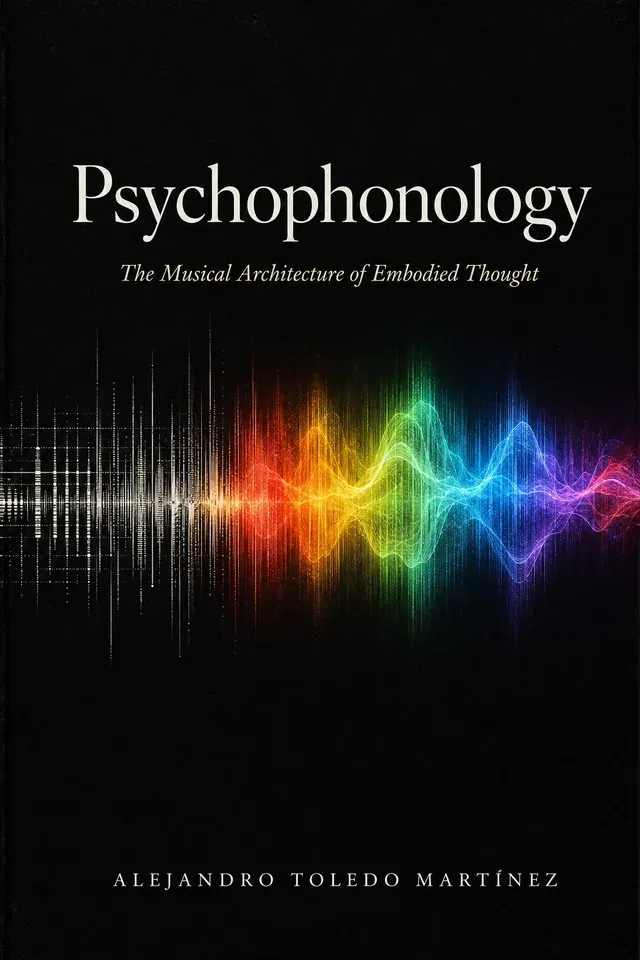
Psychophonology
How thought becomes sound: language as a psychic, logical and musical system of sound relations. Phonology kept the half you can count; this book recovers the other.